What to Know About Cleanroom Classifications and ISO Standards
Before a single wall goes up, one number has to be settled: how clean does your finished space actually need to be? Get that number wrong, and you’ll either pay for filtration and airflow capacity your process doesn’t use, or end up with a room that can’t pass inspection.
Think of it like a tailor taking exact measurements before cutting fabric. Guess too loose, and the suit won’t perform when it matters. Guess too tight, and you’ve paid for room you didn’t need. A cleanroom classification is that measurement: a defined, ISO-governed standard that tells your design team exactly how many airborne particles your space can contain and still do its job.
What Is a Cleanroom Classification?
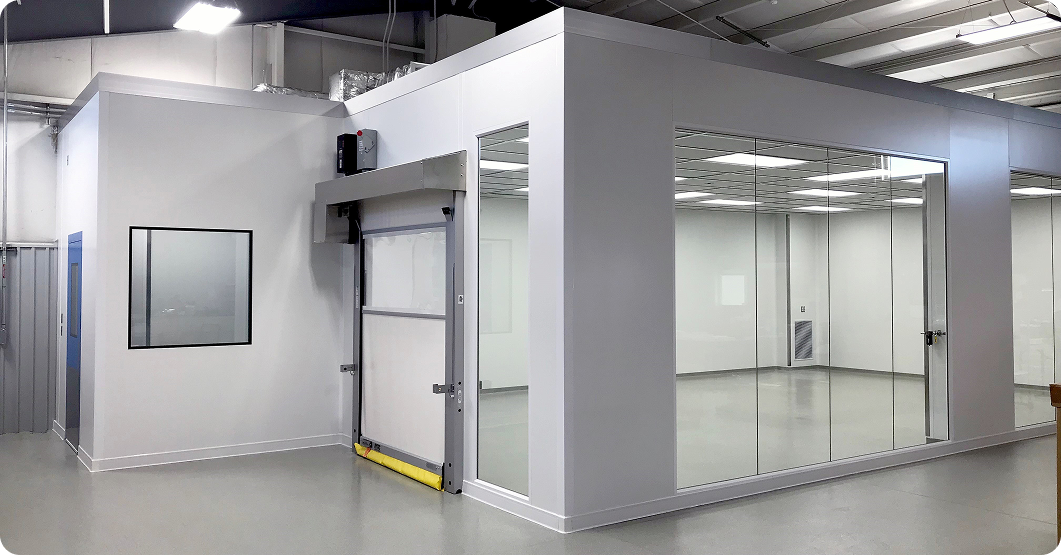
A cleanroom classification is a rating system that measures how many airborne particles of a given size are allowed in a cubic meter of air. The fewer particles permitted, the cleaner and more tightly controlled the environment.
Most industries in the US and internationally work from ISO 14644-1, the standard published by the International Organization for Standardization. It replaced the older Federal Standard 209E, which measured particles per cubic foot rather than cubic meter. You may still hear the old terminology (Class 100, Class 10,000) from teams who’ve worked in the industry for a while.
Under ISO 14644-1, classifications run from ISO 1 (the cleanest) to ISO 9 (the least stringent, only slightly cleaner than typical room air). Each class sets maximum particle counts across a range of particle sizes, from 0.1 micron up to 5 microns. The lower the ISO number, the fewer particles allowed, and the more demanding the engineering behind the room.
Why Classification Matters for Design and Compliance
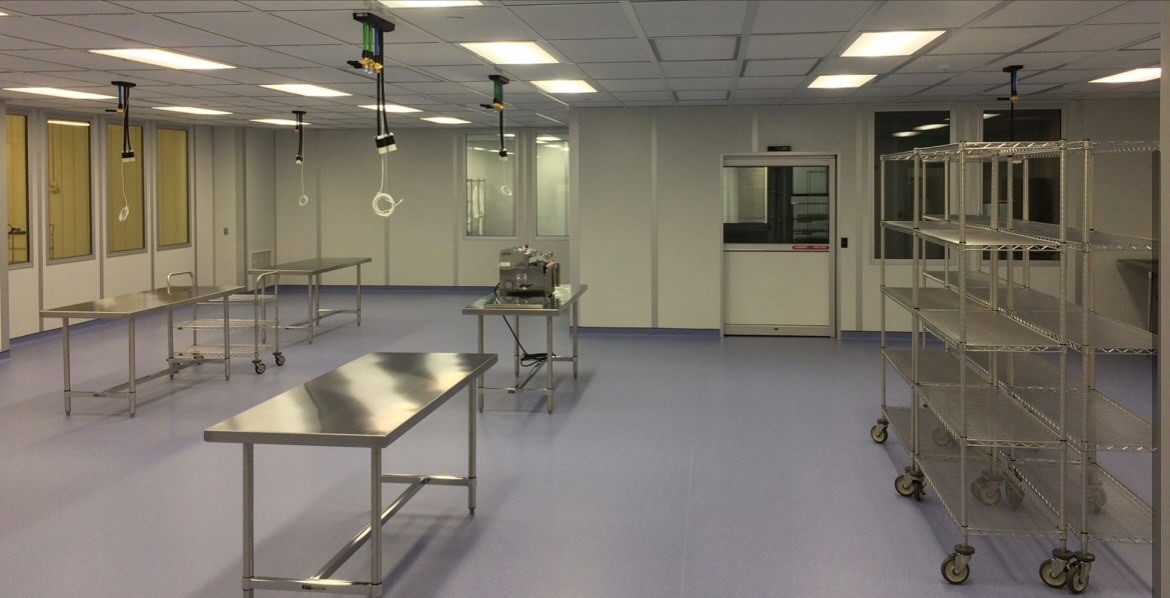
Classification isn’t a formality you check off after the room is built. It’s one of the first decisions you make, because nearly everything downstream depends on it.
Your required classification determines how much filtration coverage the ceiling needs, how many air changes per hour the HVAC system has to deliver, and what wall and flooring materials will hold up to your cleaning protocols. It even shapes how airflow moves around equipment inside the room. A space built for wet processing or static-sensitive work, for instance, may need entirely different flooring and grounding than a general assembly area at the same ISO class.
Getting this wrong in either direction has consequences. Specify too loose a classification, and a facility can fail regulatory inspections or run into contamination-related production problems. Specify too tight a classification, and a business pays for air handling capacity, filtration, and square footage its process doesn’t need.
That’s why classification decisions happen early, with input from a team who understands both the regulatory requirements and the practical realities of your process, not after the concrete’s poured.
The ISO 14644-1 Classification Scale
The ISO 14644-1 scale covers nine classifications, but most projects only ever need a handful of them. ISO 1 through 4 sit at the extreme end, reserved for the most demanding manufacturing environments. ISO 5 through 8 cover the large majority of pharmaceutical, medical device, semiconductor, and general industrial cleanroom projects. Chances are, your facility falls somewhere in this range.
As classifications get cleaner, allowable particle counts drop fast, which means more frequent air changes and finer filtration to hold that standard. Here’s where the most common classifications land:
ISO Cleanroom Classifications at a Glance
| ISO Class | Relative Cleanliness | Typical Applications | Common Air Changes/Hour |
|---|---|---|---|
| ISO 1–4 | Ultra-high purity | Advanced semiconductor fabrication, nanotechnology, specialized research | 300–750+ |
| ISO 5 | Critical environments | Sterile pharmaceutical filling, semiconductor manufacturing | 240–360 |
| ISO 6 | Precision manufacturing | Electronics assembly, some medical device production | 90–180 |
| ISO 7 | Controlled manufacturing | Pharmaceutical preparation, medical device manufacturing | 30–60 |
| ISO 8 | General controlled environments | Packaging, general manufacturing, less stringent compounding | 10–25 |
These figures are general benchmarks. Actual design requirements vary by process and room size, which is why classification decisions should account for the specific manufacturing process a room supports rather than industry norms alone.
ISO 1 Through ISO 4: The Rarest Classifications
ISO 1 through ISO 4 sit at the far end of the scale. ISO 1 allows as few as 10 particles per cubic meter of air; ISO 4 allows up to 10,000. Most facilities never need to go anywhere near this range.
Maintaining that level of control takes 300 to 750 or more air changes per hour, full ceiling coverage of fan filter units, and ULPA filtration instead of standard HEPA. This is largely the territory of advanced semiconductor manufacturing, nanotechnology, and select research applications.
If you’re considering this range, confirm with your engineering team that it’s genuinely necessary first. This is one of the few places in cleanroom design where more isn’t automatically better. It’s just more expensive to build and run.
Common ISO Classifications and Where They’re Used (ISO 5-8)
The bulk of real-world cleanroom projects fall between ISO 5 and ISO 8. Each classification supports a different type of manufacturing process, with its own design and compliance expectations:
- ISO 5 is one of the most tightly controlled classifications in common use, typically requiring unidirectional airflow and 240 to 360 air changes per hour. It shows up most often in sterile pharmaceutical filling and semiconductor manufacturing, where even microscopic contamination can compromise a product.
- ISO 6 sits just below ISO 5 in stringency, generally running 90 to 180 air changes per hour. This classification is common in precision manufacturing, including electronics assembly and certain medical device production that needs tight particle control without the full demands of ISO 5.
- ISO 7 is among the most frequently specified classifications across pharmaceutical and medical device manufacturing, typically calling for 30 to 60 air changes per hour. It’s especially common in preparation and compounding areas. Pharmaceutical manufacturing carries its own layered requirements on top of ISO classification, including GMP grades and viable particle limits. For a full breakdown, see our guide to the classification of cleanrooms in the pharmaceutical industry.
- ISO 8 is the least stringent of the commonly used classifications, generally requiring 10 to 25 air changes per hour. It’s a common fit for general packaging areas, equipment storage, and other support functions that don’t require a fully classified core room. Gown rooms and anterooms that precede a cleaner space, including many USP 797 cleanroom compounding suites, are commonly built at this classification.
How Air Changes and Filtration Relate to Classification
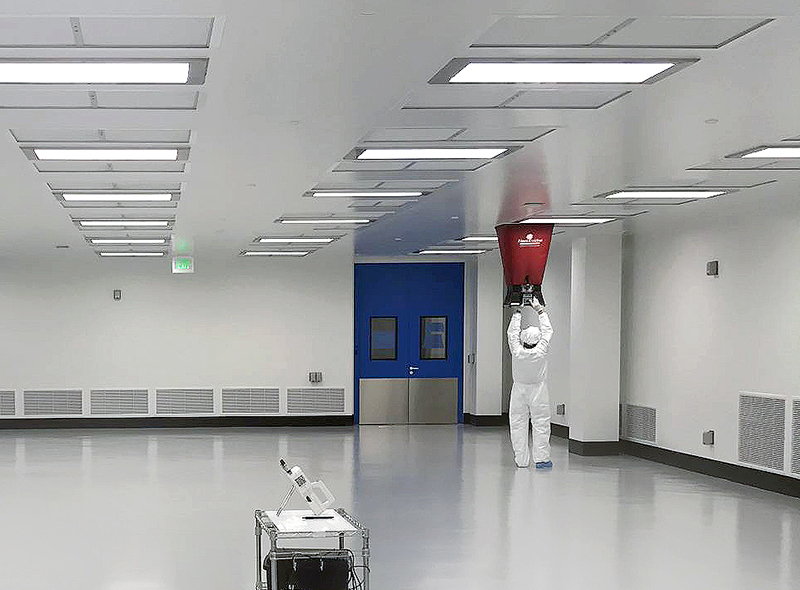
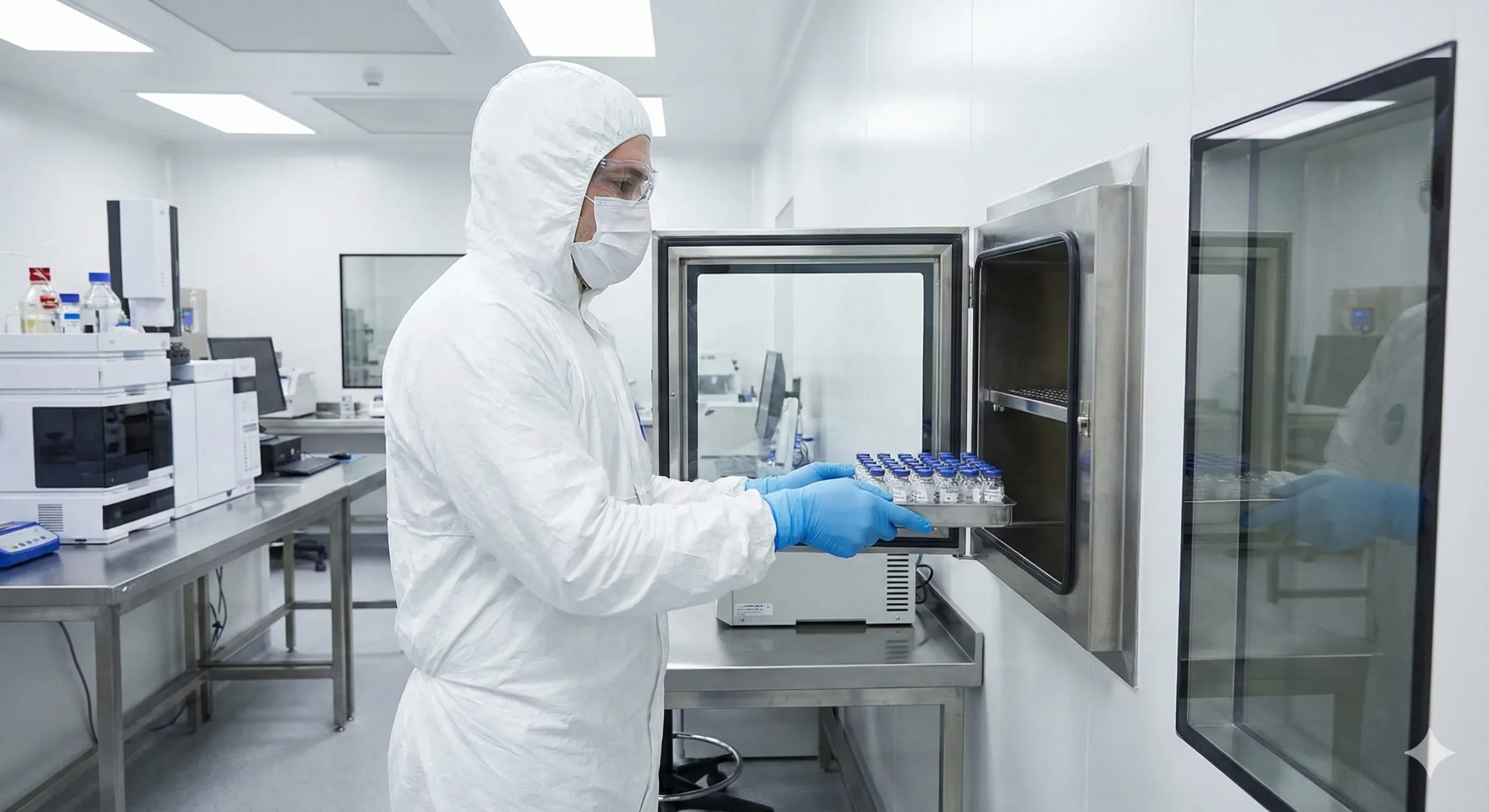
Air changes per hour and filtration type are the two levers that make a classification possible. The cleaner your required classification, the more often the room’s entire air volume has to pass through a filter, and the finer that filter needs to be.
At the ISO 8 end, standard HEPA filtration and a moderate number of air changes usually get the job done. Move toward ISO 5 and below, and rooms shift toward full ceiling coverage of fan filter units with unidirectional airflow, where filtered air moves straight down and exits through the floor or low wall returns.
Filtration tightens right along with the classification. HEPA filters, rated to capture 99.97 percent of particles at 0.3 microns, cover you through ISO 6 to 8. ULPA filters step in for ISO 5 and the rare ISO 1 through 4 projects. None of this is a decision to make after the fact. Getting the air change rate and filtration type right is mechanical engineering as much as compliance, and it has to happen before construction begins.
ISO 14644-1 vs. Other Cleanroom Standards
ISO 14644-1 is the primary classification system across most industries, but it’s rarely the only standard your cleanroom has to satisfy. Depending on your industry, extra layers of compliance often stack on top of the ISO number itself.
Federal Standard 209E, once the standard in the US, was officially withdrawn in 2001 in favor of ISO 14644-1. It classified rooms by particles per cubic foot rather than cubic meter, using familiar terms like Class 100 or Class 10,000. Some older facilities and specifications still reference these figures, and they translate reasonably well to their ISO equivalents.
Pharmaceutical and sterile manufacturing environments often need to satisfy EU GMP Annex 1 as well, which classifies clean areas by letter grade (A through D) rather than ISO number, and adds microbiological limits on top of particle counts. Grade A, the most stringent, generally aligns with ISO 5.
Compounding pharmacies work within USP 797 and USP 800 requirements, which specify ISO classifications for different types of compounding activities alongside their own procedural and facility requirements. A facility built to satisfy USP standards still needs to meet the underlying ISO classification for each space, rather than treating one standard as a substitute for the other.
How Precision Environments Approaches Cleanroom Classification
Precision Environments has been designing and building cleanrooms since 1989, and classification sits at the center of nearly every project we take on. Whether a client needs an ISO 8 packaging space or an ISO 5 environment for semiconductor manufacturing, the requirement shapes our engineering decisions from the earliest planning stages. Our six-phase turnkey process, concept and planning, regulatory and compliance consulting, engineering and design, construction management, analysis and certification, and maintenance and service, keeps classification in view at every stage.
We work across ISO Class 4 through 8 environments and are A2LA accredited under ISO/IEC 17025:2017 for the certification work that confirms a room meets its intended classification. The same team behind the design also builds the mechanical systems and controls that keep the room in spec, including our in-house DDC control systems. These systems monitor HVAC performance, airflow, temperature, and humidity in real time, so classification requirements are met on day one and maintained over the life of the facility.
We’ve supported clients across pharmaceutical, medical device, semiconductor, biotechnology, and aerospace manufacturing, among other industries, with about 80 percent of our work coming from repeat clients. Whether the project calls for a pharmaceutical cleanroom, a semiconductor facility, or a metrology lab, classification guides our approach from concept through certification. We’re ready to talk through what your process needs before a single wall goes up.
Frequently Asked Questions
What ISO classification does my facility need?
The right classification depends on your process, not just your industry. Semiconductor manufacturing and sterile pharmaceutical filling often call for ISO 5 or lower, while general manufacturing, packaging, and gowning areas frequently work within ISO 7 or ISO 8. The safest way to land on the right number is working with an engineering team that can assess your specific process, the equipment inside the room, and any regulatory requirements your industry carries.
Can one facility have multiple cleanroom classifications?
Yes, and it’s common. A single facility often includes a cleaner core room surrounded by less clean anterooms and gowning spaces that step down in classification. This layered approach controls how particles move between zones and keeps the most critical process areas at the classification they actually need, without requiring the entire facility to meet that same standard.
How often does a cleanroom need to be recertified to its classification?
Most facilities recertify annually, though the right interval depends on your classification, industry, and regulatory requirements. The original commissioning tests typically serve as the baseline that every future recertification gets measured against, which is why accurate initial testing matters so much.
What's the difference between a Class 100 cleanroom and an ISO 5 cleanroom?
They’re effectively the same thing described under two different systems. Class 100 comes from the retired Federal Standard 209E, which measured particles per cubic foot, while ISO 5 comes from the current ISO 14644-1 standard, which measures particles per cubic meter. The two line up closely enough that older Class 100 specifications are generally treated as equivalent to ISO 5 today.