by Lyza Barkus | Jul 25, 2025 | Cleanroom Blog, Cleanroom Knowledge Base
A cleanroom split system DX HVAC (Direct Expansion Heating, Ventilation, and Air Conditioning) is a type of cooling system commonly used in smaller cleanroom environments where central chilled-water systems may not be feasible. The system utilizes refrigerant to provide cooling and humidity control within the cleanroom and is designed to provide precise environmental control for cleanrooms, ensuring temperature, humidity, and air quality are maintained within specific parameters.
by Lyza Barkus | Jul 25, 2025 | Cleanroom Blog, Cleanroom Knowledge Base
A cleanroom split system DX HVAC (Direct Expansion Heating, Ventilation, and Air Conditioning) is a type of cooling system commonly used in smaller cleanroom environments where central chilled-water systems may not be feasible. The system utilizes refrigerant to provide cooling and humidity control within the cleanroom and is designed to provide precise environmental control for cleanrooms, ensuring temperature, humidity, and air quality are maintained within specific parameters.
by Lyza Barkus | Jul 25, 2025 | Cleanroom Blog, Cleanroom Knowledge Base
A cleanroom split system DX HVAC (Direct Expansion Heating, Ventilation, and Air Conditioning) is a type of cooling system commonly used in smaller cleanroom environments where central chilled-water systems may not be feasible. The system utilizes refrigerant to provide cooling and humidity control within the cleanroom and is designed to provide precise environmental control for cleanrooms, ensuring temperature, humidity, and air quality are maintained within specific parameters.
by Lyza Barkus | Mar 26, 2024 | Cleanroom Blog, Cleanroom Knowledge Base, Jeff Meek
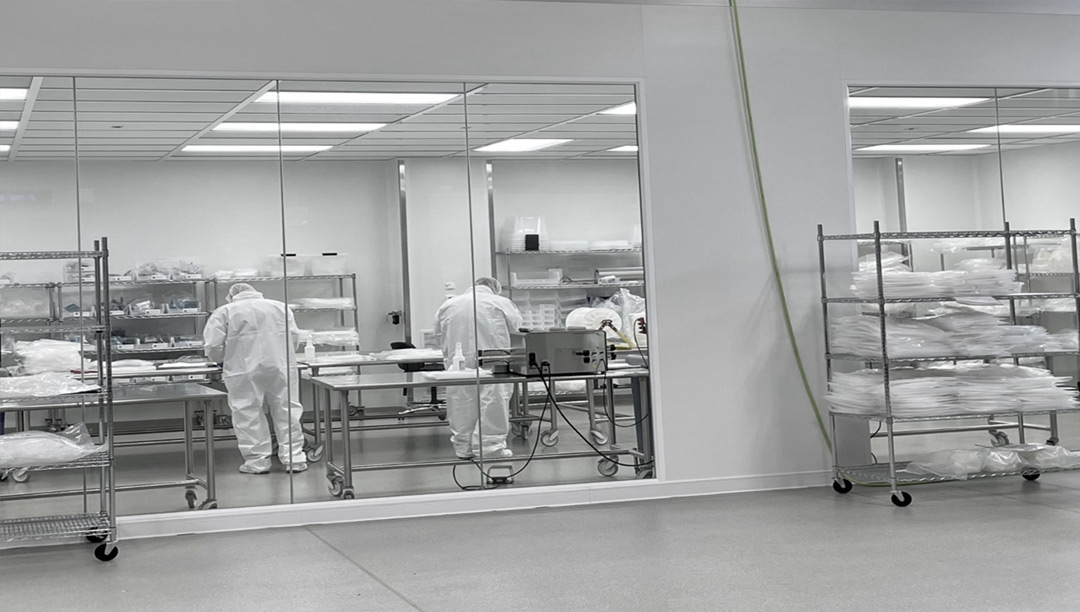
Cleanrooms serve as critical environments across diverse industries, ensuring product quality, safety, and compliance with regulatory standards. Let us explore several types of cleanrooms and give a quick look at their applications:
by Lyza Barkus | Mar 12, 2024 | Cleanroom Blog, Cleanroom Knowledge Base, Cleanroom Standards, Jeff Meek
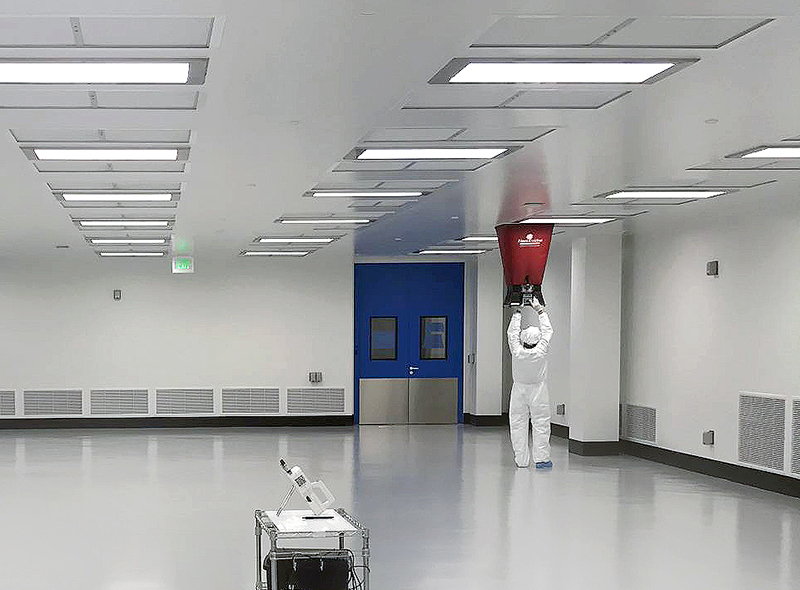
When it comes to creating a cleanroom environment, one of the fundamental questions that arises is, which ISO 14644-1 standard should be adopted?. These standards, ranging from ISO 1 to ISO 9, dictate the maximum allowable particles per cubic meter, with particle sizes ranging from 0.1 µm to ≥5 µm. However, understanding these classifications requires more than just numbers and ranges; it demands a real-world perspective on particle sizes and contamination sources.
