What Is an ISO 5 Cleanroom Classification? Standards and Requirements
Summary: ISO 5 cleanrooms maintain maximum 3,520 particles (≥0.5 μm) per cubic meter through advanced HEPA filtration, unidirectional airflow, and 240-600 air changes per hour. These environments require sophisticated monitoring systems, rigorous maintenance protocols, and comprehensive personnel training to achieve and maintain their stringent cleanliness standards for critical manufacturing applications.
ISO 5 cleanrooms deliver superior cleanliness levels required for advanced manufacturing and research applications where product quality depends on exceptional environmental control. Cleanroom spaces maintain extremely low particle counts through precise engineering and construction methods. Organizations implementing ISO 5 environments should review the technical requirements to achieve and maintain this classification level.
Work with Precision Environments to design ISO and cGMP compliant cleanrooms built for regulatory audits, process reliability, and long term performance.
Struggling to meet pharma cleanroom compliance requirements?
ISO 5 Cleanroom Standards and Performance Requirements
ISO 5 cleanrooms need to meet stringent performance specifications that control multiple environmental parameters simultaneously. The design, engineering, and construction of these environments require advanced expertise and integrated systems working together to maintain classification standards:
ISO Classification System Framework
The International Organization for Standardization established ISO 14644-1 as the global standard for clean room classifications. This system defines nine cleanroom classes (ISO 1 through ISO 9) based on maximum allowable concentrations of airborne particles per cubic meter. ISO 5 corresponds to the former Class 100 designation from Federal Standard 209E, which referenced particles per cubic foot rather than cubic meter. While ISO 5 environments are necessary for critical applications, ISO 6 cleanrooms offer a balanced approach for less stringent processes while still maintaining excellent contamination control.Attributes of ISO 5 (Class 100) Cleanrooms
ISO 5 environments maintain tightly controlled air cleanliness through niche mechanical systems and architectural components. Cleanrooms feature high air change rates, unidirectional air flow systems, pressure cascades, and specific facility materials. Design for ISO 5 cleanroom applications integrates multiple engineering aspects to maintain required particle counts during both at-rest and operational states. Proper maintenance of cleanroom filtration and HVAC systems is beneficial for preserving ISO 5 classification, as even minor performance degradation can cause classification failures.Maximum Permitted Particle Measurements
ISO 5 cleanrooms must maintain particle counts below these strict limits:- ≥0.1 μm: 10,200 particles per cubic meter
- ≥0.2 μm: 2,370 particles per cubic meter
- ≥0.3 μm: 1,020 particles per cubic meter
- ≥0.5 μm: 352 particles per cubic meter
- ≥1.0 μm: 83 particles per cubic meter
- ≥5.0 μm: 29 particles per cubic meter
Designing a cleanroom for critical drug manufacturing?
Precision Environments delivers purpose built pharmaceutical cleanrooms that protect product integrity, support aseptic processes, and scale with your production needs.
ISO 5 Cleanroom Design and Construction Components
Building an ISO 5 cleanroom requires intricate construction methods, materials, and equipment integration. The mechanical and architectural systems function together as a unified solution to control airborne particles, room pressurization, temperature stability, and humidity levels:Air Filtration and HEPA Requirements
ISO 5 cleanrooms utilize high-efficiency particulate air (HEPA) filtration systems that remove 99.97% of particles 0.3 microns and larger. Cleanroom environments typically include:- H13 or H14 grade HEPA filters
- Fan filter units covering 15-25% of the ceiling area
- Air change rates between 240-600 air changes per hour
- Terminal HEPA filtration at all air supply points
Room Pressure Differentials and Airflow Patterns
ISO 5 cleanrooms sustain positive pressure relative to adjacent spaces to prevent outside contamination infiltration. Key airflow design elements include:- Pressure differentials of 12.5-15 Pa between ISO 5 areas and surrounding spaces
- Unidirectional air flow patterns that move air in parallel streams
- Controlled air velocities of 0.3-0.5 m/s in work areas
- Intentionally located return air pathways that create predictable air patterns
Wall, Floor, and Ceiling Components
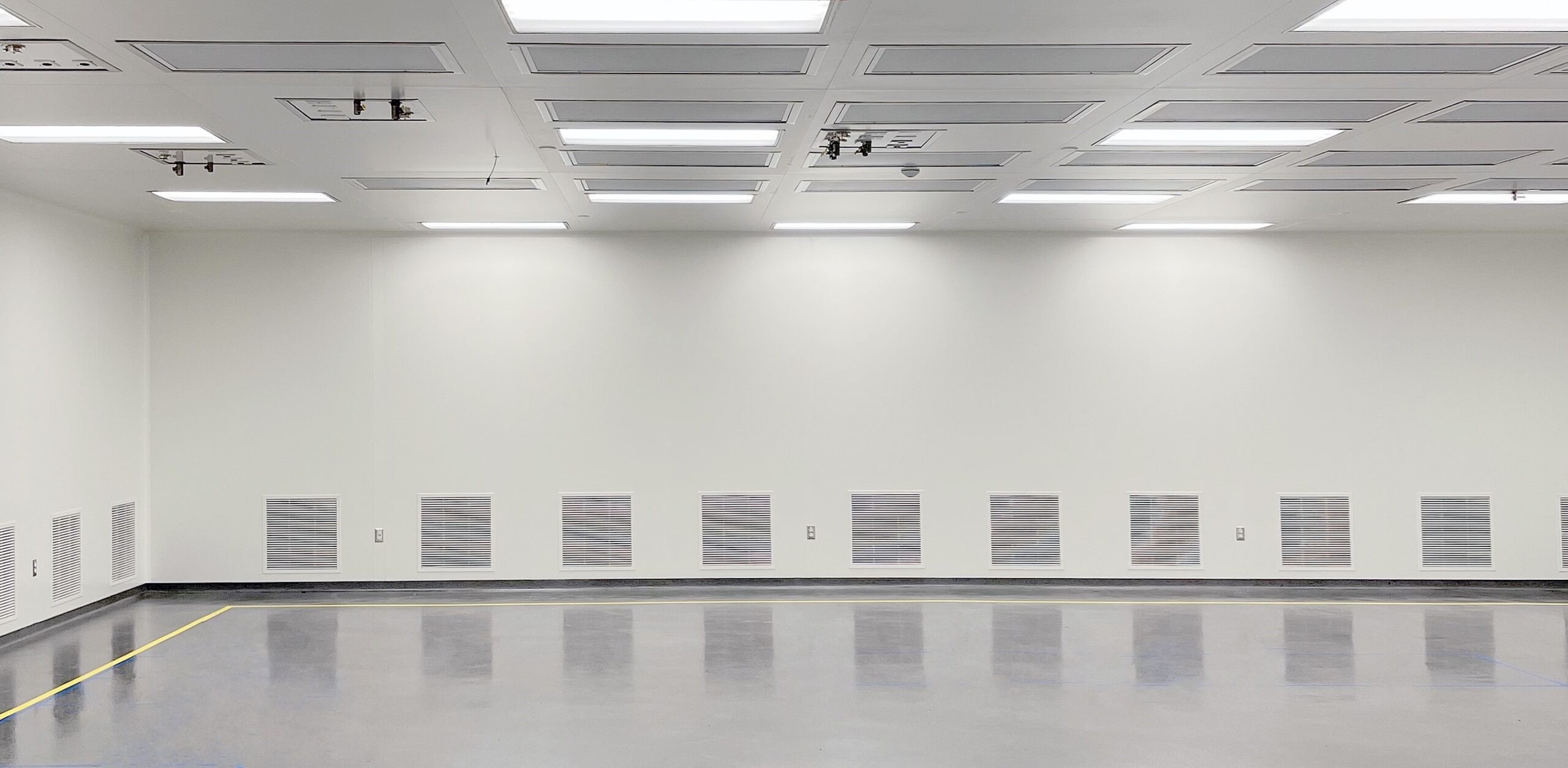
ISO 5 environments incorporate non-shedding, cleanable, and chemical-resistant construction materials:- Walls: Pharmaceutical-grade composite panels with non-particulating surfaces
- Floors: Epoxy or vinyl systems with coved corners and integral base
- Ceilings: Walkable grid systems supporting HEPA filters and cleanroom lighting
- Windows and Doors: Flush-mounted designs with minimal horizontal surfaces
- Wall and Ceiling Penetrations: Factory-sealed and gasketed assemblies
Facing contamination control challenges?
Let Precision Environments handle your cleanroom design and engineering needs with proven results that exceed ISO standards

Monitoring and Maintaining ISO 5 Performance Standards
After commissioning and certification, ISO 5 cleanrooms require rigorous monitoring programs and preventive maintenance to uphold their classification and operational performance:Particle Counting and Air Monitoring Systems
ISO 5 pharmaceutical cleanrooms incorporate comprehensive monitoring technologies:- Remote particle counters measuring particle counts continuously
- Digital differential pressure sensors between adjacent spaces
- Temperature and humidity monitoring points
- Air velocity measurement stations at critical locations
- 21 CFR Part 11 compliant data systems for trend analysis
Cleaning and Sanitization Protocols
The ISO 5 environments call for rigorous contamination control procedures:- Cleanroom wipes made from polyester or other non-shedding substrates
- Cleanroom mops with stainless steel handles and polyester covers
- Sterile IPA and other ISO 5-compatible cleaning agents
- Documented Standard Operating Procedures for cleaning tasks
- Environmental monitoring after cleaning to verify effectiveness
Personnel Requirements and Gowning Procedures
People working inside represent the primary source of contamination in ISO 5 environments. These cleanrooms typically include:- Documented training protocols for all personnel
- Multi-stage gowning sequences in dedicated gowning room areas
- Sterile coveralls, hoods, masks, goggles, and gloves covering all exposed skin
- Air shower entries for semiconductor and pharmaceutical applications
- Defined movement patterns and behavior protocols while inside the cleanroom