Rethinking Cleanroom Design: Introducing Decorative, Compliant Wall Systems
In controlled environments, performance has always come first. From ISO classification to material compatibility, every surface is engineered to minimize contamination, withstand rigorous cleaning protocols, and maintain environmental integrity.
But what if those same surfaces could do more? What if cleanroom walls could maintain compliance while also contributing to the visual experience of the space?
The Concept: Functional Surfaces with Interior Design Flare
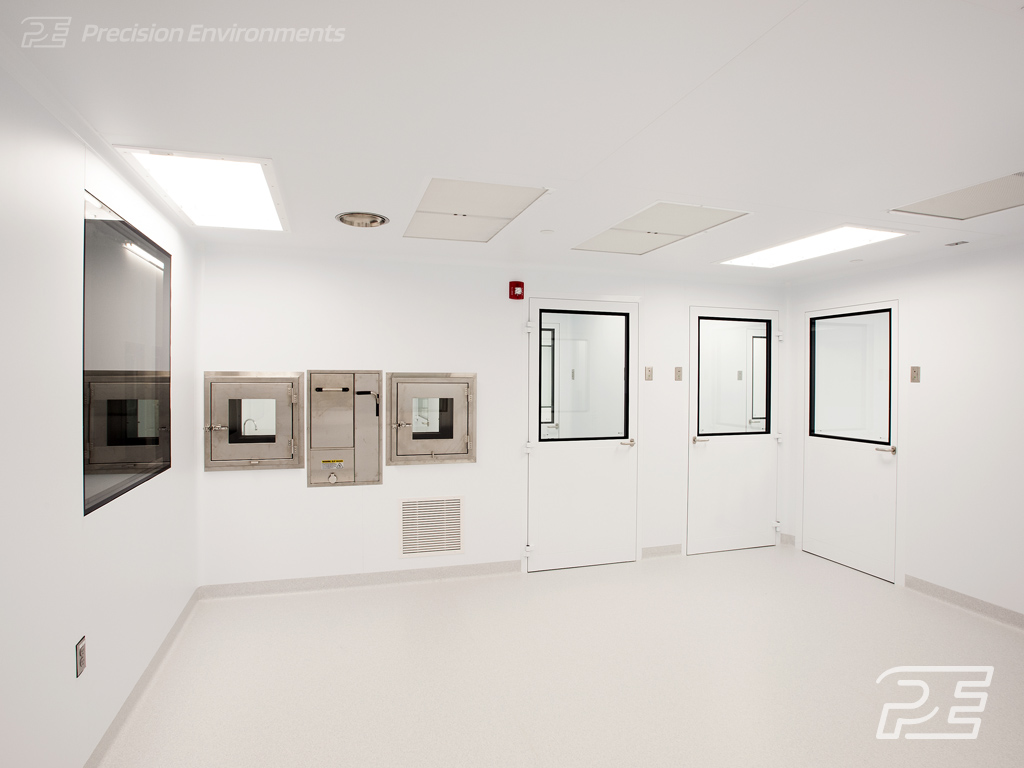
Traditional cleanroom finishes like uPVC panels, white coving, painted steel, or fiberglass-reinforced plastics are selected for durability, cleanability, and chemical resistance. Aesthetic considerations are typically limited to neutral tones for consistency and visibility.
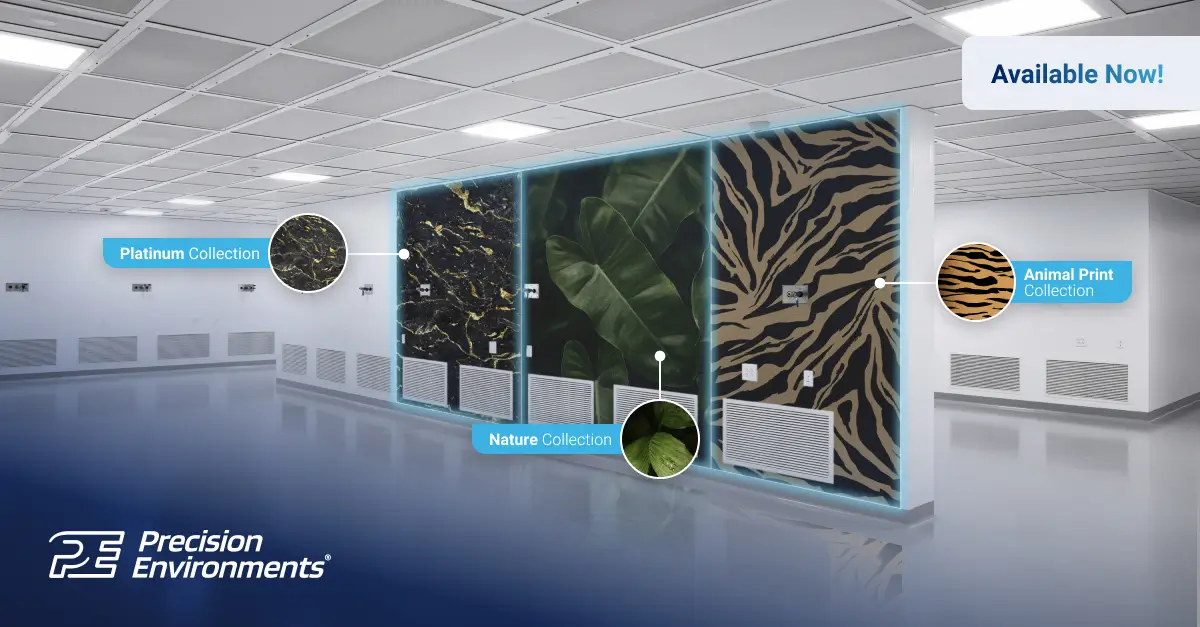
However, advancements in polymer coloration and coating technologies are opening the door to a new category: decorative, compliant wall systems.
These systems integrate color and pattern directly into the material, rather than applying it as a surface-level treatment maintaining performance while introducing controlled visual variation.
How It Works: Color Integrated at the Material Level
Rather than relying on post-applied films or coatings, this approach leverages established plastic coloration methods used in high performance manufacturing.
Plastics can be colored during processing through techniques such as:
- Color compounding – blending pigments directly into the resin
- Masterbatching – introducing concentrated pigment pellets into base polymers
- Pre-colored resins – delivering fully integrated color at the raw material stage
These methods ensure uniform dispersion of pigments throughout the polymer matrix, rather than leaving color vulnerable at the surface.
Why This Matters for Controlled Environments
- No surface layer to chip, peel, or degrade
- Consistent color even after abrasion or impact
- Compatibility with cleaning agents and disinfection protocols
- Reduced risk of particulate generation compared to applied films
Application 1: Pigment-Impregnated uPVC Wall Systems
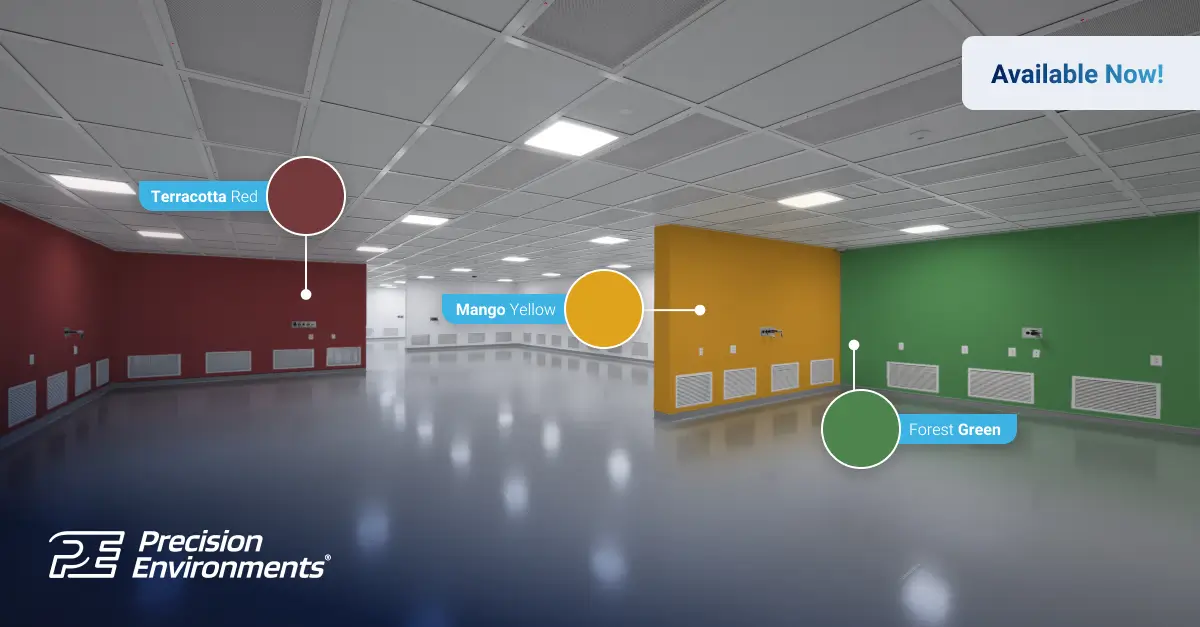
Unplasticized PVC (uPVC) is widely used in controlled environments due to its rigid structure, smooth non-porous surface, and strong resistance to chemicals and moisture.
By incorporating pigments directly into the uPVC during extrusion or panel manufacturing, these systems achieve:
- Full-depth coloration (not just surface coating)
- High color stability and uniform dispersion
- Resistance to wear without exposing a different substrate beneath
- Compatibility with additives such as UV stabilizers or antimicrobial agents
Because the color is integrated into the material itself, uPVC panels maintain both aesthetic consistency and cleanroom performance over time even under frequent cleaning and operational wear.
Application 2: Decorative Coatings for Painted Steel Systems
For controlled environments utilizing painted steel panel systems, decorative capability is achieved through advanced coating technologies.
These systems can incorporate:
- Multi-layer powder coatings with integrated pigments
- High-performance resins engineered for chemical resistance
- Controlled gloss and reflectivity for visibility and inspection
- Additives such as anti-microbial or anti-static agents
While the color is not embedded within the substrate as it is with uPVC, modern coating systems are engineered to provide strong adhesion, uniformity, and long-term durability —ensuring they perform reliably in controlled environments.
Installation Considerations: Built for Field-Proven Cleanroom Methods
To ensure these decorative wall systems perform as intended, installation follows the same best practices used in standard cleanroom construction without introducing additional complexity for contractors or facility teams.
uPVC Panel Systems
Pigment-impregnated unplasticized PVC (uPVC) panels are installed using conventional cleanroom panel methodologies, including:
- Mechanically fastened subframes or modular panel systems
- Thermal welding at seams to create monolithic, flush surfaces
- Chemical seam bonding where welding is not feasible
- Routed edges to maintain tight tolerances and consistent joint geometry
Because the color is fully integrated throughout the panel, any field modifications such as cutting for outlets, utilities, or penetrations do not require touch-up or refinishing.
This is a key advantage over coated or laminated systems, where exposed edges can become a compliance risk.
Painted Steel Panel Systems
For painted steel applications, installation remains consistent with industry-standard modular wall systems:
- Factory-finished panels installed with concealed fasteners
- Gasketed or sealed joints to maintain airtightness
- Touch-up protocols for fasteners or field penetrations using compatible coatings
- Coordination with ceiling grids, lighting, and mechanical penetrations for flush alignment
Advanced coating systems are designed to withstand typical installation handling, minimizing the risk of damage during panel placement and alignment.
Maintaining Flush, Cleanable Surfaces
Across both systems, installation is executed with a focus on:
- Flush transitions between panels, doors, and glazing systems
- Elimination of ledges, lips, or exposed fasteners
- Continuous sealant application at all joints and penetrations
- Integration with flooring systems (coved or flush) to maintain full envelope integrity
The end result is a fully integrated wall system that meets cleanroom performance standards while delivering a consistent visual finish across the entire space.
Seamless Integration for Flush-Finish Cleanroom Systems
For life science and pharmaceutical environments, surface aesthetics can never come at the expense of constructability or compliance. That’s why these decorative wall systems are designed to integrate seamlessly into flush-finish cleanroom assemblies.
Utilizing pigment-impregnated uPVC panels or advanced coated steel systems, wall assemblies can be fabricated to support:
- Flush-mounted joints and concealed fastening systems
- Thermally welded or chemically bonded seams (for uPVC applications)
- Compatible gasketing and sealants to maintain airtightness
- Integration with flush doors, vision panels, and utility penetrations
The result is a continuous, smooth wall surface that supports cleanability, reduces particulate traps, and aligns with ISO and GMP expectations—while introducing subtle, controlled design elements.
From a performance standpoint, these systems preserve the core requirements of critical environments:
- No ledges, gaps, or exposed edges that could harbor contaminants
- High durability under repeated cleaning and disinfection cycles
- Long-term color stability without chipping, peeling, or flaking
By embedding design into the material itself—rather than applying it post-production—these panels maintain the integrity of a flush system without introducing additional failure points.
Performance Considerations
Any decorative system for controlled environments must meet strict criteria:
- Cleanability: resistance to disinfectants and cleaning cycles
- Durability: resistance to abrasion, impact, and wear
- Low outgassing: compatibility with sensitive processes
- Particulate control: no flaking, chalking, or degradation
Because the color is either embedded in the uPVC or chemically bonded within coating systems, these approaches avoid many of the risks associated with traditional decorative films or laminates.
The Future of Controlled Environment Design
As facilities evolve, so do expectations not just for performance, but for usability, branding, and employee experience.
While sterile, uniform environments will always have their place, there is growing interest in spaces that:
- Improve wayfinding through color coding
- Reinforce brand identity
- Enhance occupant comfort without compromising compliance
Decorative, compliant wall systems represent a natural evolution leveraging existing material science to expand what’s possible in controlled environments.